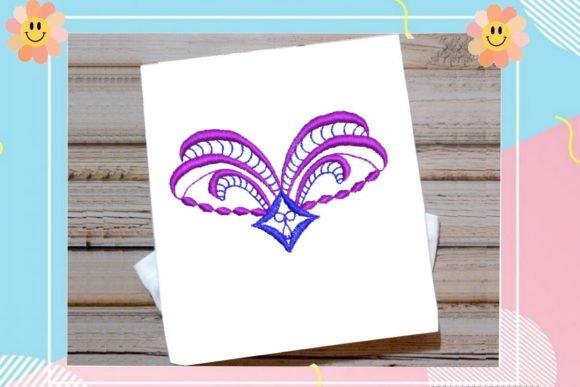
Butterfly Border Design Review for Small Business Merch
As an experienced embroidery designer who has spent years refining digital files for commercial use, I often receive requests to evaluate new designs before they are committed to production. Today, I am reviewing the Butterfly Border, a design that promises to make any fabric look sweet and modern. While the product description is brief, my job is to dig deeper into how this machine embroidery design will perform in the real world of small business merch, branded patches, and custom apparel. If you are an Etsy seller, a boutique owner, or a craft business creator, understanding the nuances of this embroidery file is crucial before you start stitching.
First Impressions: A Sweet and Modern Vibe
The title Butterfly Border immediately suggests a design that balances playfulness with structure. The description highlights that it can make items look "sweet and modern," which is a powerful combination for brands trying to appeal to a contemporary audience without losing a touch of warmth. In the world of brand identity, this duality is essential. It feels friendly enough for a bakery or a florist but structured enough for a creative studio or a professional service provider.
When visualizing this as a design asset, I see it functioning well as a decorative frame or a subtle accent rather than a standalone centerpiece. The concept of a border implies continuity and framing, which makes it ideal for wrapping around sleeves, edging aprons, or creating a finished look on tote bags. It strikes a balance between being purely decorative and serving a functional purpose in layout design. This versatility is what separates a good digital embroidery file from a great one used in high-volume production.
Real-World Applications for Small Business Merch
Let us imagine a scenario where a local café or a handmade shop wants to launch a line of branded merchandise. How does Butterfly Border fit into their strategy? For a café, this design could be stitched along the hem of a barista apron, adding a whimsical yet professional touch that customers notice immediately. It transforms a standard work uniform into a piece of brand storytelling.
For pet brands or boutique clothing lines, the embroidered patch application is particularly strong. A small, circular patch featuring the butterfly motif could serve as a chest logo accent on denim jackets or hoodies. It adds a layer of perceived value to the finished product, making a simple t-shirt feel like a premium item. Furthermore, for event merch or customer gifts, using this border on the edge of tote bags creates a cohesive look that ties the entire collection together. When a customer receives a gift bag with a consistent, high-quality embroidery detail, it signals attention to detail and care.
I also envision this design working beautifully on caps. A curved cap embroidery project often requires designs that flow with the shape of the hat. A border design can wrap elegantly around the side panel or sit subtly on the front brim, offering a unique alternative to the standard central logo. For product packaging accents, stitching this border onto cardboard tags or fabric labels attached to handmade goods can elevate the unboxing experience, reinforcing the handmade product narrative.
Strategic Considerations and Limitations
While the potential is high, every commercial embroidery project comes with technical constraints that must be managed carefully. As a designer, I advise caution when applying Butterfly Border to very small patch sizes. If the design is too intricate relative to its size, the stitches may crowd each other, leading to a muddy appearance that lacks definition. Similarly, on cap fronts or curved surfaces, the tension of the fabric can distort the border if the hoop size and stabilizer choice are not optimized.
Stitch density is another critical factor. Designs with high stitch counts can become stiff and uncomfortable if placed on lightweight fabrics or worn frequently. For items that need frequent washing, such as staff uniforms or kitchen aprons, the durability of the thread colors and the stability of the design placement are paramount. If the stitch density is too high, the fabric may pucker, ruining the professional look of the custom apparel.
Furthermore, textured fabrics can hide the fine details of a border design. On heavy canvas or bouclé, the delicate lines of a butterfly motif might get lost. Dark uniforms present another challenge; unless the thread colors offer high contrast, the embroidery may not pop as intended. It is vital to review the thread colors against the specific fabric texture you plan to use to ensure the design remains legible and attractive.
Impact on Brand Identity and Customer Trust
In the competitive landscape of small business, visual consistency is key to building brand identity. Using a cohesive design like Butterfly Border across various touchpoints—from tote bag design elements to staff uniforms—creates a unified visual language. This consistency fosters customer trust and recognition. When a buyer sees the same elegant border on a product tag, a shopping bag, and a promotional hat, it reinforces the professionalism of the brand.
This level of detail also enhances product value. Customers are often willing to pay more for items that show signs of craftsmanship. A well-executed embroidered patch or a clean border on an apron suggests that the business cares about quality. It elevates the perception of the handmade product from a simple commodity to a curated experience. Ultimately, these design choices drive buyer engagement by creating a memorable aesthetic that stands out in a crowded marketplace.
Practical Designer Notes for Production
Before committing to a full production run, there are several steps every designer and business owner should take. First, test the design in black and white first. This helps you visualize the stitch density and spacing without the distraction of color. Check if it works at your intended small patch size; if the details blur, you may need to simplify the file or increase the dimensions.
Always inspect the spacing and confirm the hoop size required for the design. You must test on real fabric, not just a swatch, because different materials react differently to tension. Use proper stabilizer to support the fabric during stitching; this is non-negotiable for preventing puckering. Creating a printable mockup for client approval allows you to catch issues before the machine starts running.
Finally, compare it beside other design assets to ensure it matches your existing style guide. Most importantly, confirm commercial licensing before business use. Ensure you have the rights to use the embroidery file for mass production and resale. If exact stitch counts, file formats, or specific license terms were not provided in the initial product description, you must verify these details directly with the supplier to avoid legal or technical pitfalls.
By following these guidelines, Butterfly Border can become a versatile tool in your arsenal, helping you create stunning embroidery projects that resonate with your audience and grow your brand.